Wednesday, January 25, 2012

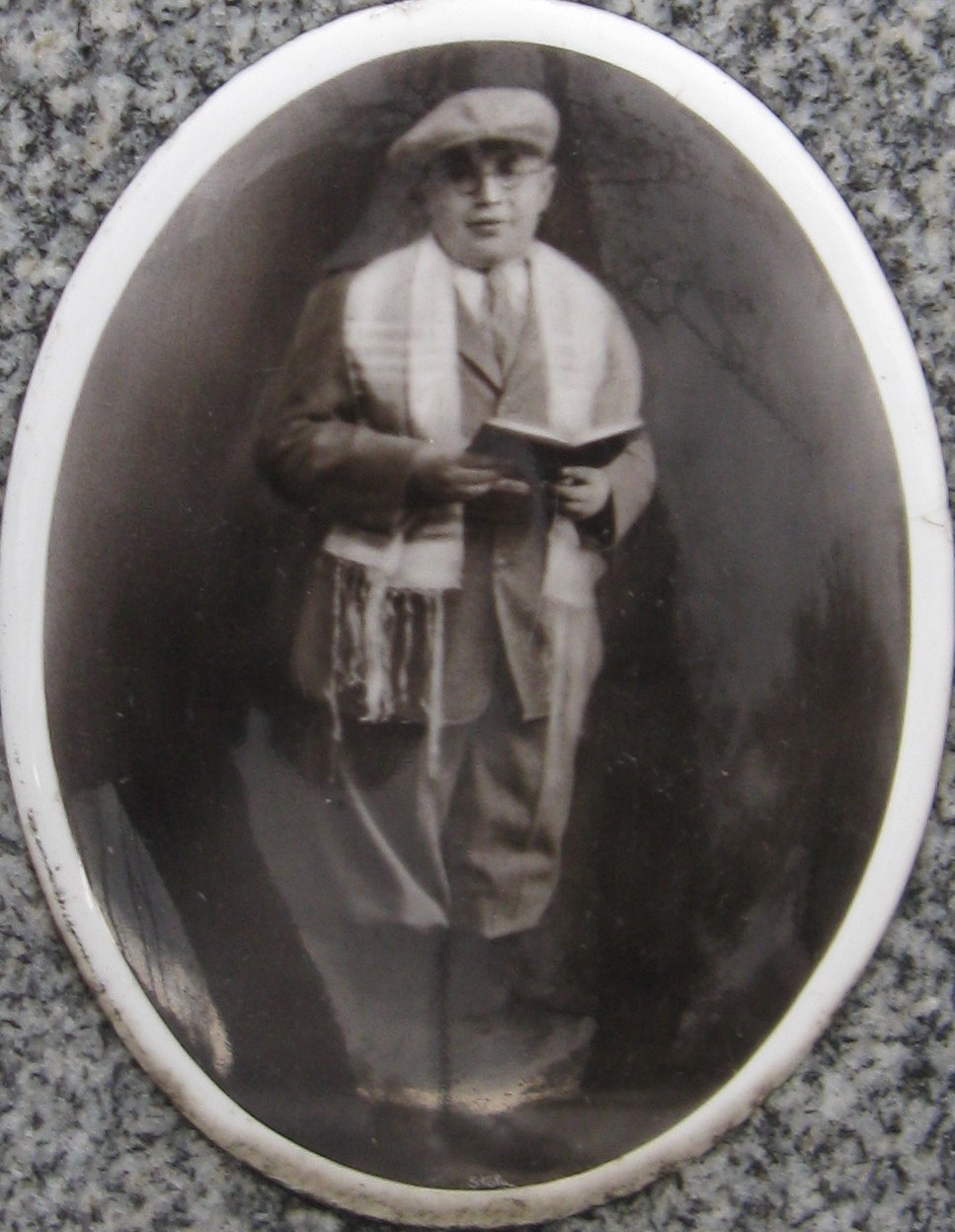
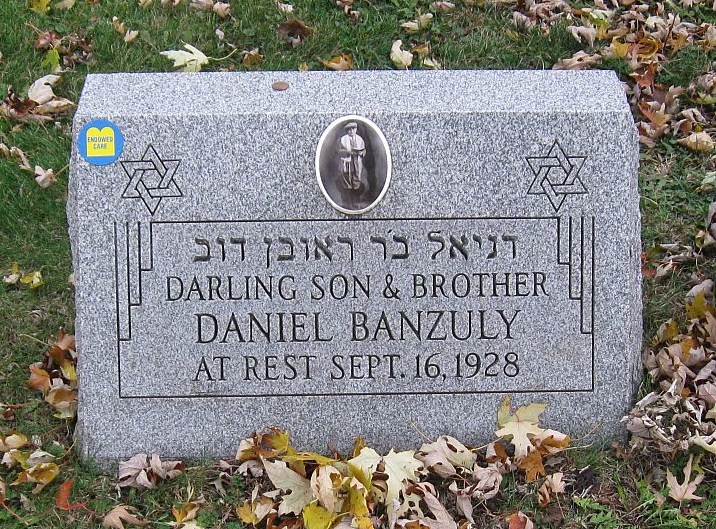
"YOUR BROKEN-HEARTED FAMILY" - Daniel Banzuly

This one started a little differently than most of my grave photos - this one started with an "In Memoriam" notice in the Chicago Daily Tribune on September 16, 1929.  The Notice said:

In Memoriam

BANZULY - Daniel Banzuly.  In loving memory of our darling, son of Robert and Minnie Banzuly, fond brother of Michael and Rose Aronfeld, who passed into eternal rest one year ago today.
YOUR BROKEN-HEARTED FAMILY

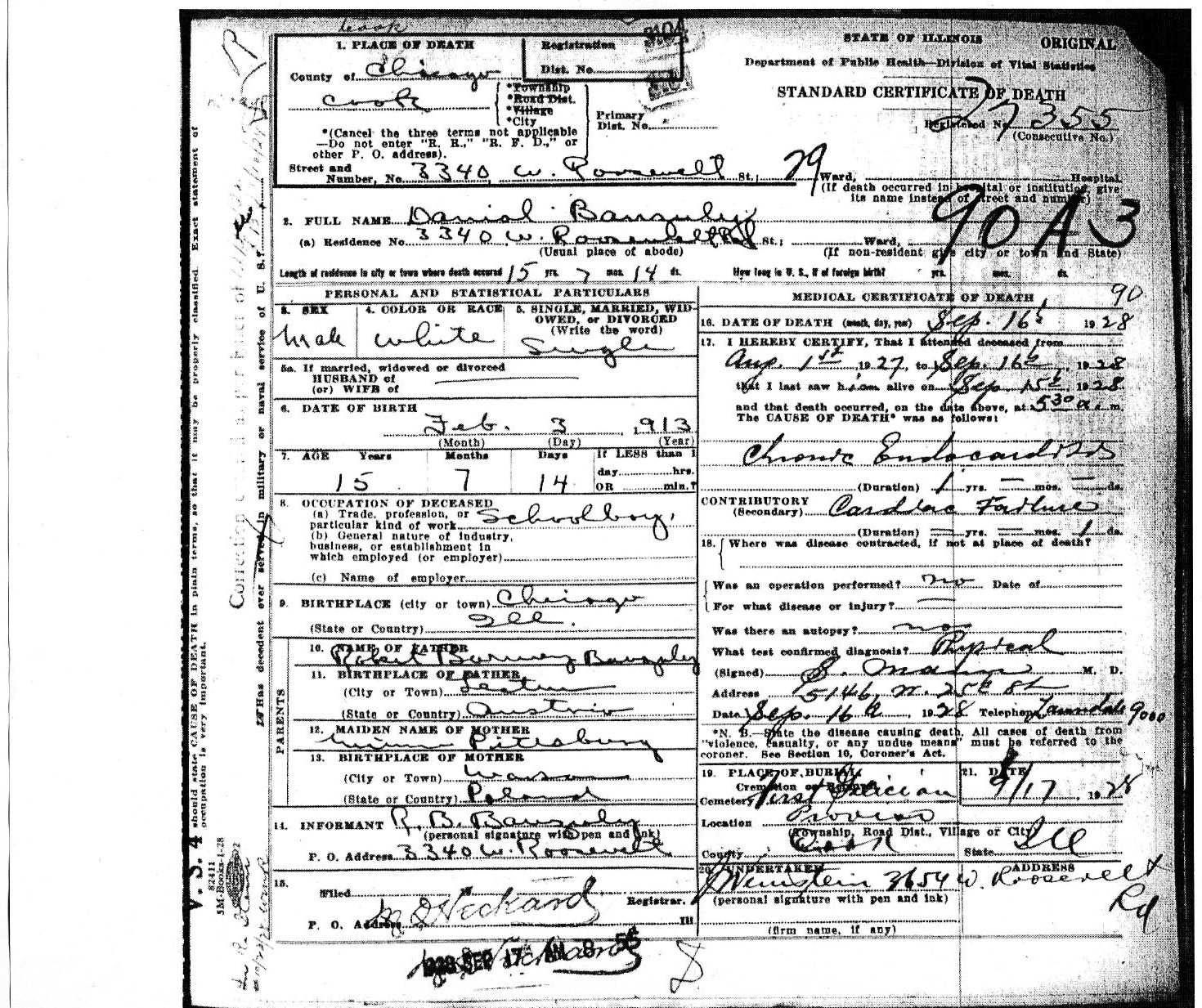
So I pulled the death certificate for Daniel Banzuly to see what happened.


As you can see, Daniel Banzuly died at the age of fifteen in his home on September 16, 1928 of chronic endocardosis and cardiac failure. Daniel is buried with his family at Jewish Waldheim Cemetery, Gate 201 - First Gallician Aid Society.


I'm sure his family never got over the loss of their dear son and brother at an age where he had his whole life ahead of him.  Daniel may be gone, but he is not forgotten.  May Daniel and his family rest in peace.

Tuesday, January 17, 2012

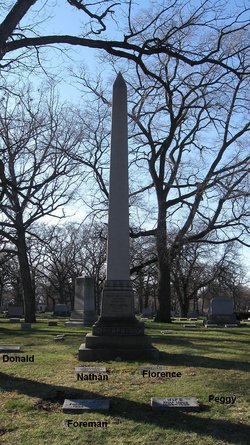
THE SINS OF THE SON ARE VISITED ON THE FATHER - Nathan F. Leopold, Sr.

Most Chicagoans are familiar with the story of Richard Loeb and Nathan Leopold, Jr.  They were two brilliant and wealthy young men who set out to commit “the perfect crime” in 1924 by kidnapping and murdering young Bobby Franks.  They did not commit the perfect crime – they made some foolish mistakes and were soon caught, and after a sensational trial sentenced to life imprisonment.   If you are not familiar with the story, there is a good synopsis in Wikipedia:


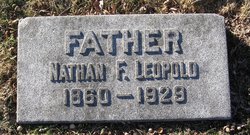
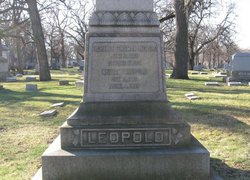
Few realize that there are more people who suffer when a heinous crime is committed than the victim himself.  The families of the victims suffer, of course, but few ever think about the families of the perpetrators who also are victims “by association.”  This came to my mind several weeks ago when I was driving through Rosehill Cemetery and came upon an imposing monument that said “LEOPOLD” and the flat gravestone labeled “Father - Nathan F. Leopold, 1860-1929”.  Mercifully, Nathan Jr.’s mother died in 1921 before the crime was committed but Nathan Sr’s obituary from the Tribune tells a sad tale of this forgotten victim:

N.F. LEOPOLD SR. TAKEN BY DEATH AFTER OPERATION

Nathan F. Leopold, Sr., wealthy financier died last night at the Michael Reese Hospital.  He was operated on ten days ago by Dr. Solomon Strauss and his condition had been reported improving until yesterday afternoon.  He had been in the lake transportation business since 1876, but retired recently.

Mr. Leopold’s life was saddened in 1925 in the discovery that his son, Nathan F. Leopold, Jr., had killed little Bobby Franks, a crime to which young Leopold and Richard Loeb pleaded guilty.

Nathan Leopold, Sr., was a respected and well liked business man.  He was born in Eagle River, Mich., on July 2, 1860, and came to Chicago with his parents in 1867.  He married Florence G. Foreman in 1892 and their life together was happy until her death in 1921.

After the trouble over his son Mr. Leopold and his two other sons, Foreman and Samuel, moved from the old home at 4754 Greenwood Avenue.  In 1927 Mr. Leopold married Mrs. Daisy K. Hahn of Los Angeles and after a wedding trip they resided at 420 Roscoe Street.

During the last winter the Leopolds were in California.  Soon after their return last month Mr. Leopold became ill and an operation was deemed necessary.  Dr. Strauss said the ailment was something similar to gallstones.  Chicago Daily Tribune – April 5, 1929

In a strange twist of fate, the family of Richard Loeb, the family of Nathan Leopold, Jr. and Bobby Franks and his family are all interred in Rosehill Cemetery.   May they rest in peace.

Nathan Freudenthal Leopold, Sr

Nathan Freudenthal Leopold, Sr

Nathan Freudenthal Leopold, Sr

Wednesday, January 11, 2012

WHAT IS THAT ON HIS TOMBSTONE??? - Wallace Rader

Yesterday on my lunch hour I went over to the Irving Park Boulevard Cemetery to do a Find a Grave photo request (what else?).  After I had taken the photo as I walked back toward my car, I looked over the tombstones to see if any looked interesting - then I saw the stone for Wallace Rader:


What is the significance of the hooded figure in the center of the tombstone?  Sure looks like the Ku Klux Klan to me.  But I can't believe the cemetery would have approved that design.  My cousin said "maybe that's why his wife didn't want to be buried with him".  Someone else said it was the angel of death - but I don't think the angel of death wears a white hood.

I checked his death certificate - he was a carpenter.  I couldn't find an obituary and I couldn't find anything about him on Google or ancestry.com other than census information and his death certificate. So I put it out there to you all in the blogosphere - what is this on Wallace Rader's tombstone?  

Monday, January 9, 2012

LOST IN THE SS SCHILLER DISASTER - Moses Kahn

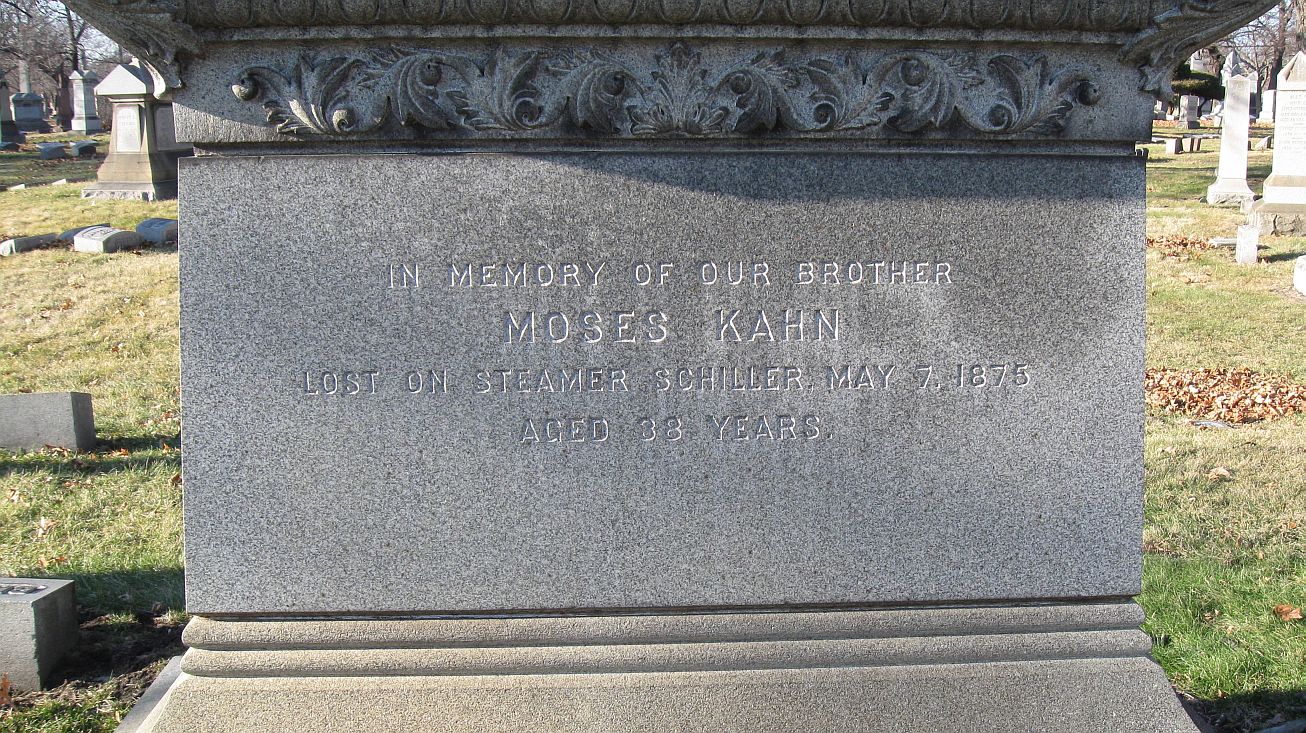
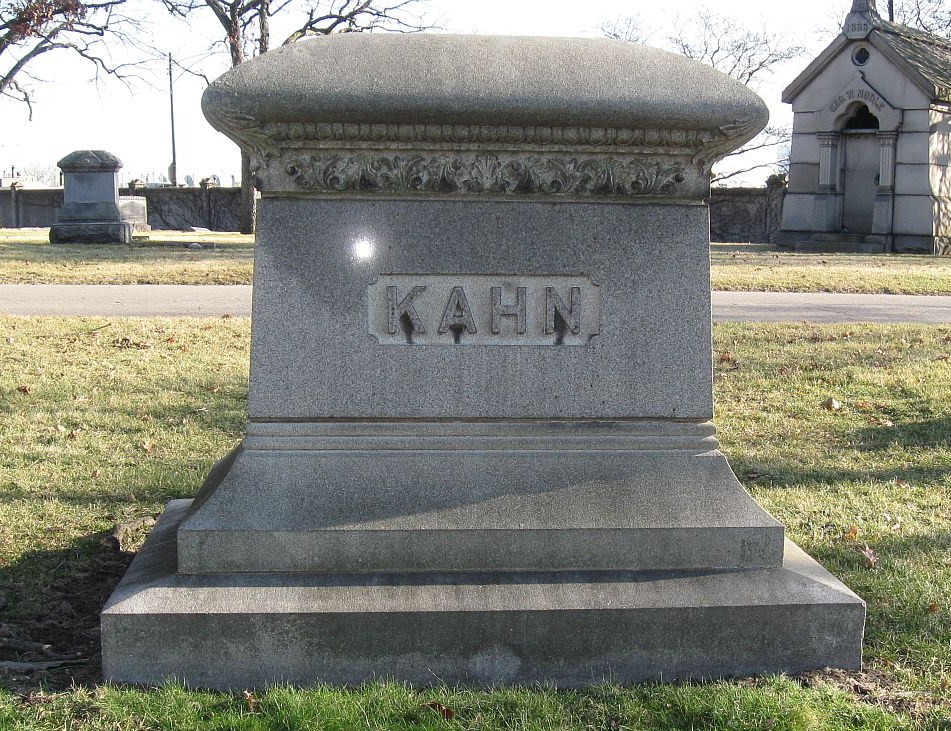
As a student of history I thought that I was aware of most all of the maritime disasters of modern times.  A trip to Rosehill Cemetery last week proved me to be wrong.  As I was photographing the grave of a prominent Chicago rabbi for kevarim.com, I looked over and saw an inscription on a large monument:

“In Memory of Our Brother
 Moses Kahn
Lost on Steamer Schiller May 7, 1875
Aged 38 Years”

I had never heard of the steamship Schiller, or of a disaster about her.  A look at Wikipedia gave me the horrendous details:

SS Schiller was a 3,421 ton German ocean liner, one of the largest vessels of her time. She plied her trade across the Atlantic Ocean, carrying passengers between New York and Hamburg for the German Transatlantic Steam Navigation Line. She became notorious on 7 May 1875, when while operating on her normal route she hit the Retarrier Ledges in the Isles of Scilly, causing her to sink with the loss of most of her crew and passengers, totaling 335 fatalities.

The ship was built 380ft long with a 40ft beam in Hamburg in August 1873 for her German owners, and had plied the Atlantic routes for just two years without major incident. In addition to her load of 254 passengers, she was carrying 250 mail bags intended for Australia, highly valuable general cargo, and 300,000 $20 coins totaling £60,000 at contemporary value and over £6 million today.

The ship was engaged to sail from New York on 27 April 1875, and had arranged to call at Plymouth and Cherbourg on her route homeward to Hamburg. She made excellent time with her combination of two masts and engines, and by 7 May was nearing her first port of call at Plymouth on the Devon coast.

Captain Thomas needed to slow due to poor visibility in thick sea fog as she entered the English Channel, and was able to calculate that his ship was in the region of the Isles of Scilly, and thus within range of the Bishop Rock lighthouse which would provide him with information about his position. To facilitate finding the islands and the reefs which surround them, volunteers from the passengers were brought on deck to try to find the light. These lookouts unfortunately failed to see the light, which they were expecting on the starboard quarter, when in fact it was well to port (nautical). This meant that the Schiller was sailing straight between the islands on the inside of the lighthouse, leaving the ship heading towards the Retarrier Ledges.

The Schiller grounded on the reef at 10pm, and sustained significant damage, but not enough in itself to sink the large ship. The captain attempted to reverse off the rocks, pulling the ship free but exposing it to the heavy seas which were brewing, which flung the liner onto the rocks by its broadside three times, stoving in the hull and making the ship list dangerously as the lights died and pandemonium broke out on deck as passengers fought to get into the lifeboats.

It was at these boats that the real disaster began, as several were not seaworthy due to poor maintenance and others were destroyed, crushed by the ship's funnels which fell amongst the panicked passengers. The captain attempted to restore order with his pistol and sword, but as he did so, the only two serviceable lifeboats were launched, carrying 27 people, far less than their full capacity. These boats eventually made it to shore, carrying 26 men and one woman.
On board the ship the situation only became worse, as breakers washed completely over the wreck. All the women and children on board, over 50 people, were hurried in to the deck house to escape the worst of the storm. It was there that the greatest tragedy happened, when before the eyes of the horrified crew and male passengers, a huge wave ripped off the deck house roof and swept the occupants into the sea, killing all inside.

The wreck continued to be pounded all night, and gradually those remaining on board were swept away or died from exposure to cold seas, wind and resulting hypothermia, until the morning light brought rescue for a handful of survivors.

The recognized manner of signaling disaster at sea was by the firing of minute guns, carried on all ships for signaling purposes. Unfortunately, it had become the custom in the islands to fire a minute gun as your ship passed safely through the area, and so the firing of the Schiller's guns failed to produce hoped for rescue. Such an operation at night and in the dark would have been near impossible anyway with such high seas, and thus it was not until the first light that rescue craft began arriving.


St Agnes pilot gig, the O and M, was summoned to investigate multiple cannon shots. Her crew discovered the mast of the sinking Schiller. The O and M rowed to pick up five survivors before returning to St Agnes for assistance. Steamers and ferries from as far away as Newlyn, Cornwall, assisted the rescue operation.

Of her original 254 passengers and 118 crew, there were 37 survivors. The death toll, 335, made the disaster one of the worst in British history.

Along with Moses Kahn, another of the victims of the disaster whose body was never recovered, was Joseph Schlitz, the brew master from Milwaukee.  Furthermore, in respect to the great assistance that the inhabitants of the Scilly Isles made to assist the mostly German people on board the Schiller, orders were given in the two World Wars to spare the Isles of Scilly from being attacked by German forces.

It is always a tragedy to lose a loved one in a disaster, but the tragedy is compounded when there is not even a body to bury.  May Moses Kahn, and all the victims of the SS. Schiller, rest in peace.


Saturday, December 31, 2011

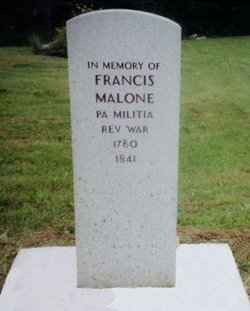
A REVOLUTIONARY WAR PATRIOT - Francis Malone

Francis Malone was born January 17, 1760 in Lancaster, Pennsylvania. The Malones were originally from County Westmeath in Ireland and one of Francis' ancestors was The Right Honorable Anthony Malone, Member of Parliament from Baronston in Ireland and Chancellor of the Exchequer.  The first Malone to emigrate was Francis' grandfather Edmund who came to the Colonies in the early 1700s.  Francis was 16 years old when the Declaration of Independence was signed in Philadelphia and he volunteered for the Pennsylvania Militia in April of 1777.  Because of his youth and familiarity with the area, Captain William Morrow assigned Francis to spy on the Indians, who were allies of the British in the Revolutionary War.  Francis would sneak into the woods, and after finding the Indian encampments would report the information back to his commanding officers.

In 1788 Francis married Elizabeth Rogers, and about 1800 Francis and his family went west, eventually locating in Helt Township, Vermillion County, Indiana.  Francis farmed the rich Indiana soil, and he and Elizabeth raised four children:  Rebecca, William, Samuel and Martha. In 1833 Francis was granted a US Government pension in recognition of his service in the War of Independence.  He died in Helt Township in 1841 at the age of 81.

It was known that Francis was buried in the Helts Prairie Cemetery in Hillsdale, Indiana, but over time the exact location of his grave, along with any grave marker, was lost.  In 2004, the William Henry Harrison Chapter of the Sons of the American Revolution in recognition of his service made arrangements to have a new marker made for Francis Malone, and had it installed next to the flagpole in the Helts Prairie Cemetery.

I am especially proud of the contribution that Francis Malone made to the founding of our nation, because he was my 4th Great-Grandfather.

May Francis Malone, and all of our patriots, rest in peace.

Francis Malone

Group picture after the memorial dedication and memorial service in Vermillion County.

Saturday, December 24, 2011

A CHRISTMAS TRAGEDY - Virginia Richdale Kerrigan

This sad story takes us all the way to Hollywood, California: 

OUR LOVE BABY - VIRGINIA RICHDALE KERRIGAN

For years I have been fascinated by the life and career of silent film star Rudolph Valentino.  In my studies about Valentino I would occasionally come across the story that Valentino used to go to the Hollywood Cemetery  to leave flowers at the crypt of a little girl he knew who had died tragically.  Further research showed that this little girl was Virginia Richdale Kerrigan, the daughter of William W. Kerrigan.  Kerrigan was the general manager of Universal Studios and the twin brother of silent film star J.W. Kerrigan.

Early in his career Valentino made movies at Universal and became captivated by the charming little girl who used to spend time at "Daddy's Studio".  Valentino loved children and one of his greatest regrets was that both of his marriages were childless.  Over time, Valentino became very close to little Virginia, and even as he became famous he still found time to take his little friend for rides in his fancy cars through the Hollywood Hills.

On the day after Christmas, 1924 Virginia and her family attended a party at a neighbor's house at 2006 Ivar Avenue in Hollywood.  It was chilly that day, as it can sometimes get in Hollywood in late December.  To take the chill out of the air, someone lit an open gas heater.  Virginia had received a new dress for Christmas and was modelling it for the partygoers.  Shortly before noon, as she laughed and twirled around the room, her dress came in contact with the gas heater and caught fire.  The flames spread rapidly to the upper part of her clothing and to her hair.  Before anyone could extinguish the flames, Virginia was badly burned around the arms, body and head.  An ambulance was called and rushed Virginia to the nearest hospital, which was Stadfield Hospital on Sunset Boulevard.  Virginia's burns were too severe, and shortly afterward she was transferred to the Hollywood Community Hospital.  Virginia fought valiantly, but the burns were too much for her little body, and she died on Saturday night, December 27, 1924.

The funeral services were held at the home of Virginia's famous uncle, J. Warren Kerrigan.  From there her body was taken to the Cathedral Mausoleum at Hollywood Memorial Park Cemetery (now Hollywood Forever Cemetery) on Santa Monica Boulevard.  Virginia was laid to rest in crypt 1399.

Virginia's family relates that Rudolph Valentino was devistated by the death of his little friend Virginia, and would often visit and leave flowers at her crypt at Hollywood Memorial.

As fate would have it, less than two years later Rudolph Valentino was himself interred in the Cathedral Mausoleum, in crypt 1205, after his tragic death in New York on August 23rd, 1926.  Valentino rests just two aisles over from his little pal Virginia.

Let us stop and say a prayer for Virginia and her family this Christmas - they are not forgotten.

Wednesday, December 14, 2011

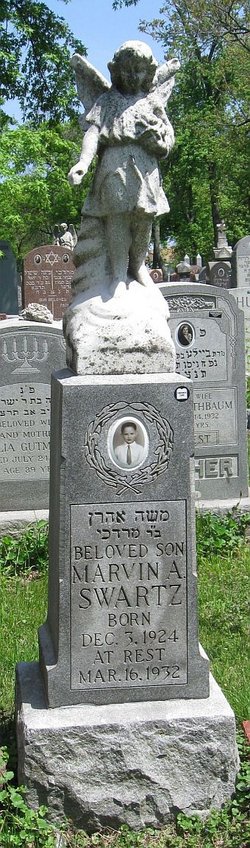
"AND IN OUR HEARTS HE LEFT A LEAK" - Marvin Schwartz and His Sister Jeanette

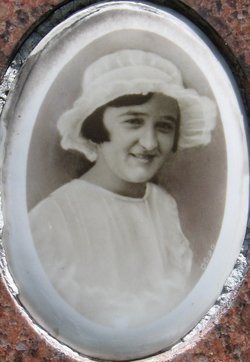
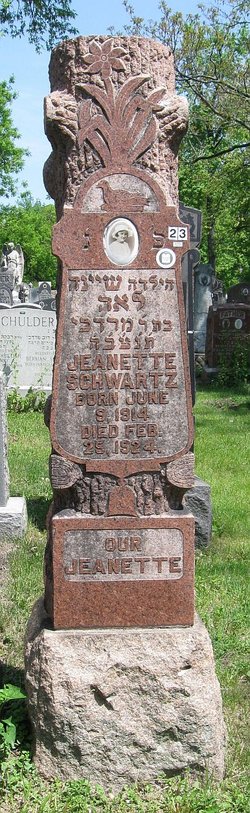
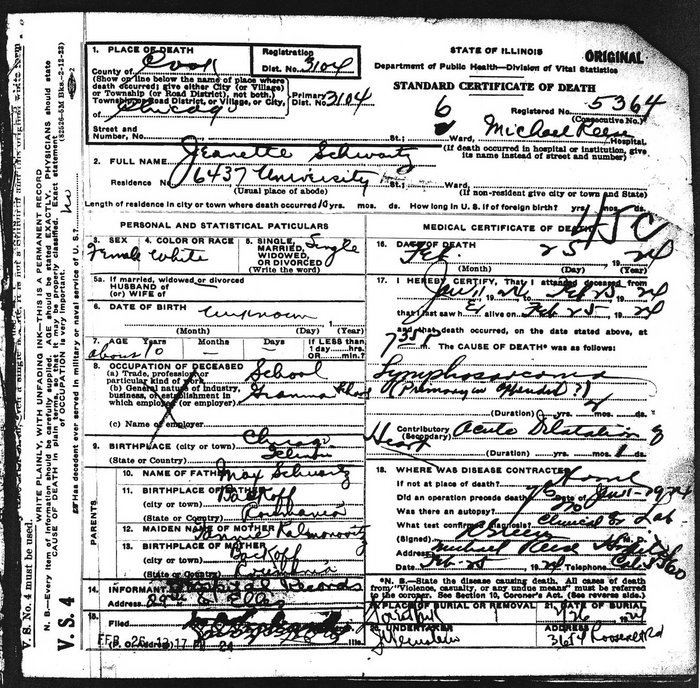
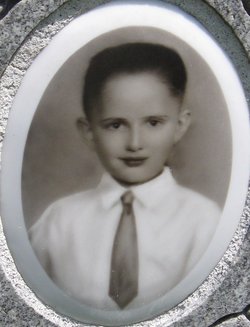
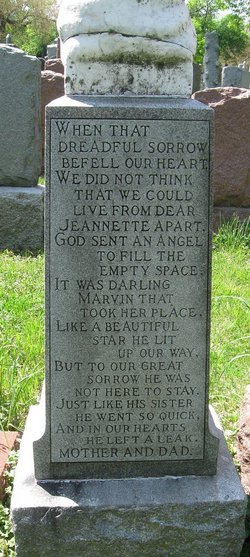
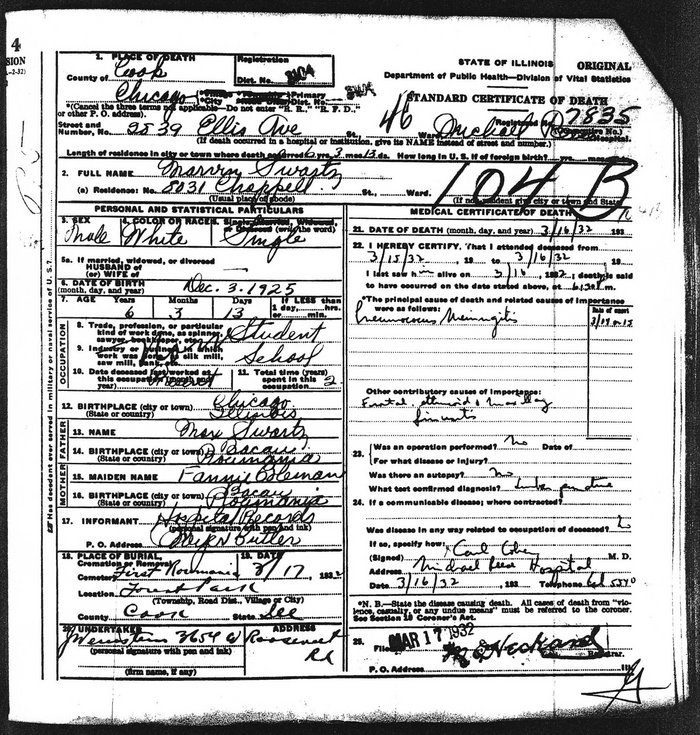
Children are often buried in a separate part of the cemetery away from the adults.  Childrens' burial sections have to be the saddest part of any cemetery, as you stroll along and see so many dear lives snuffed out by disease or accident.  On another of my photo request trips to Jewish Waldheim Cemetery in Forest Park I found myself in the children's section of Gate 55 - First Roumanian Congregation.  First I saw the grave of Jeanette Schwartz, a beautiful little girl who died in 1924 of lymphosarcoma - just shy of her 10th birthday.  A sad story - but compounded by the fact that her brother Marvin was buried in the next row.  He died in 1932 at the age of 7 of meningitis.  There was so much sadness in that family that Jeanette and Marvin's parents composed a poem about it - and put the poem on the back of Marvin's tombstone.  Here is their poem:

“When that dreadful sorrow
Befell our heart
We did not think that we could live
From dear Jeanette apart.
God sent an angel
To fill the empty space
It was darling Marvin
That took her place.
Like a beautiful star
He lit up our way
But to our great sorrow
He was not here to stay.
Just like his sister
He went so quick
And in our hearts
He left a leak.
MOTHER AND DAD”

May the souls of Marvin and Jeanette, and their grieving parents, rest in peace.

Jeanette Schwartz
Jeanette

Jeanette Schwartz


Marvin Schwartz
Marvin

Marvin Schwartz

Marvin Schwartz